Places to See in Hampi, Karnataka - Explore with Vijayshree Resort
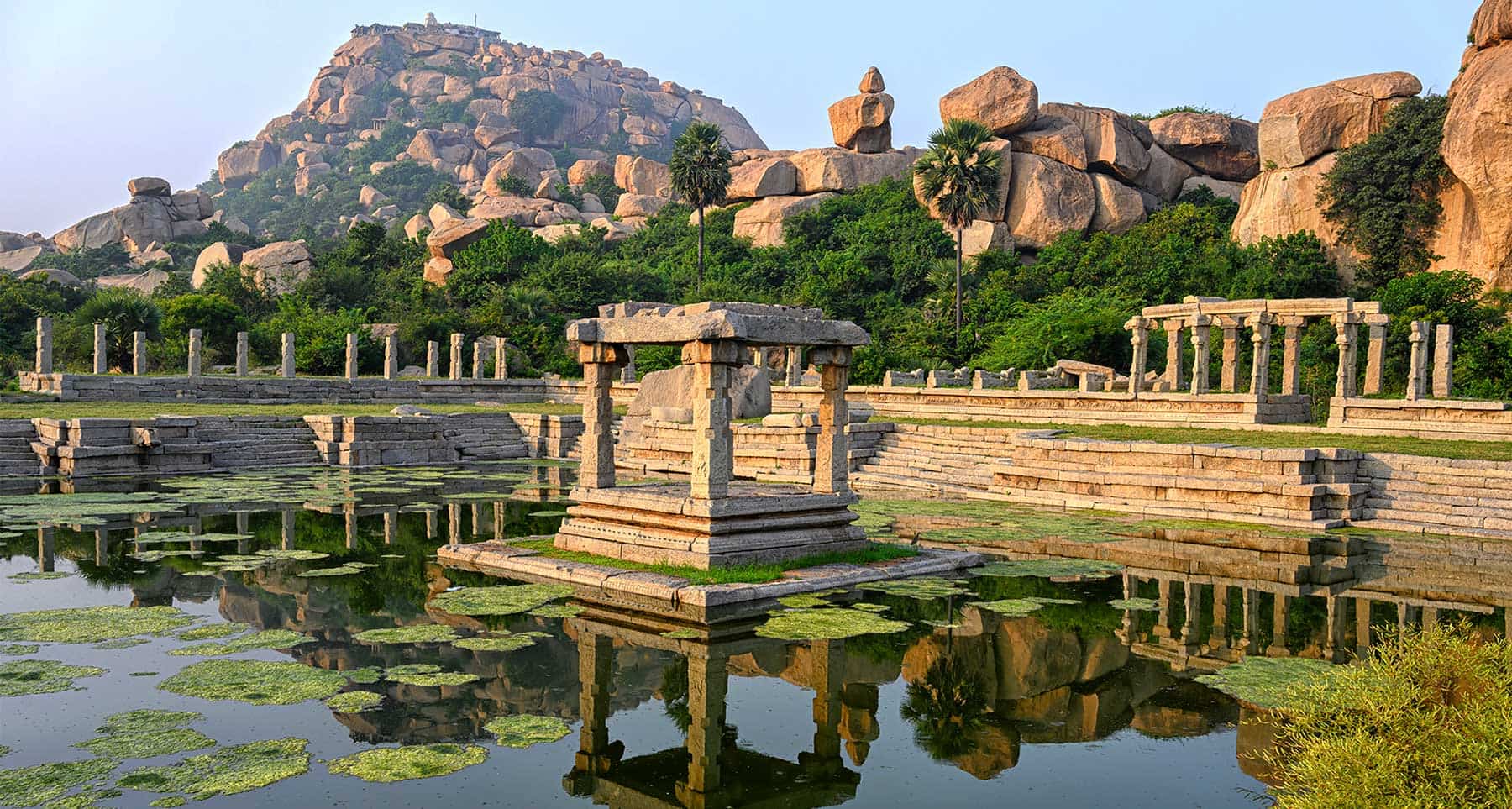
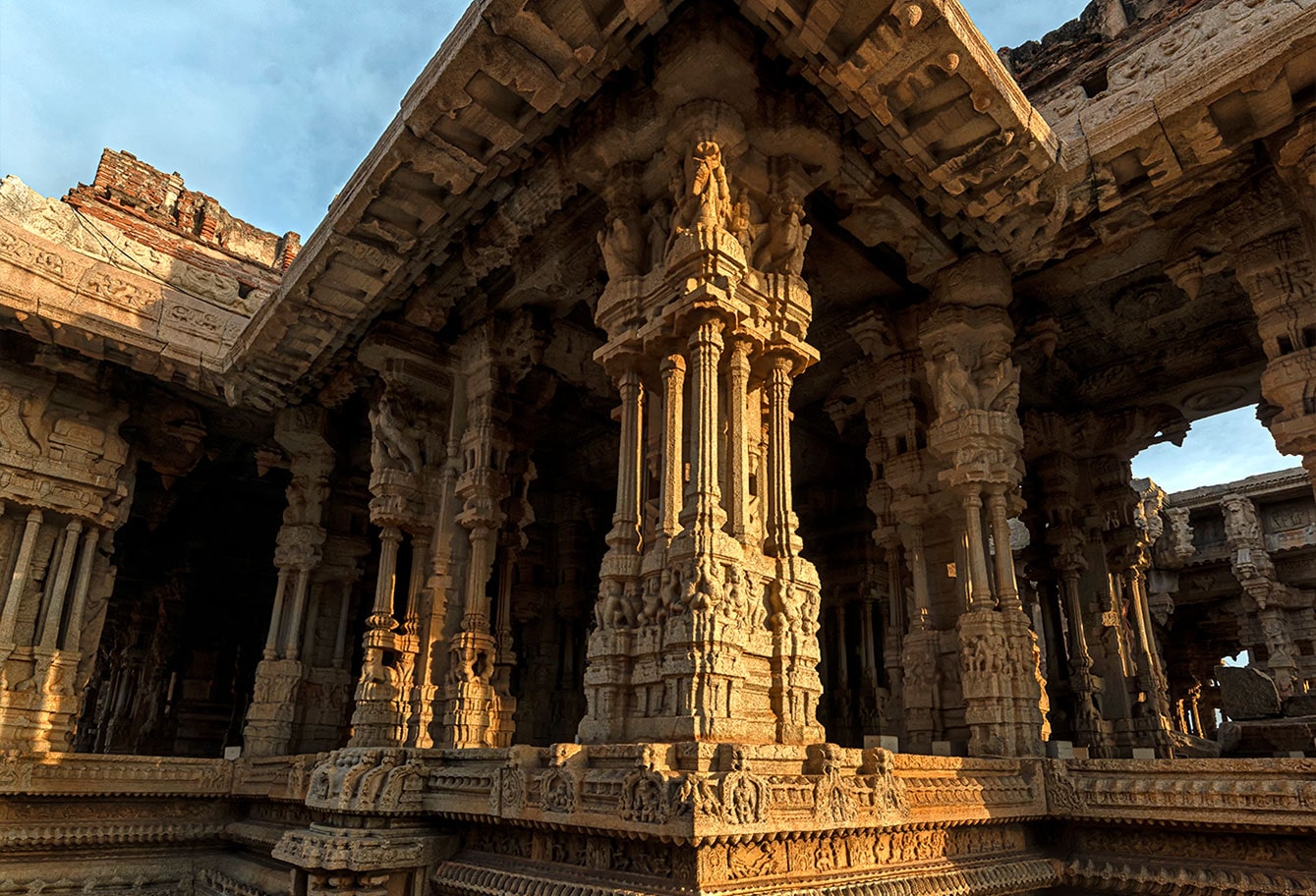
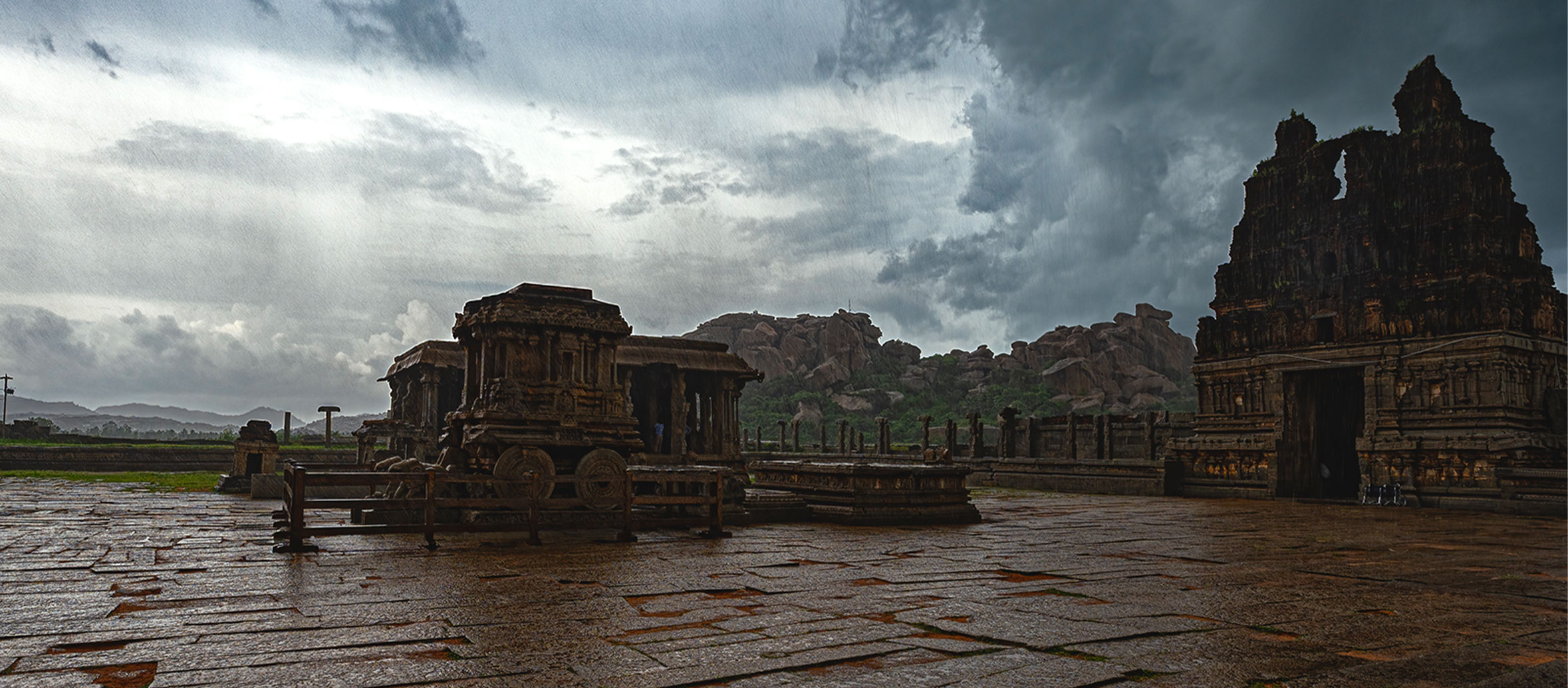
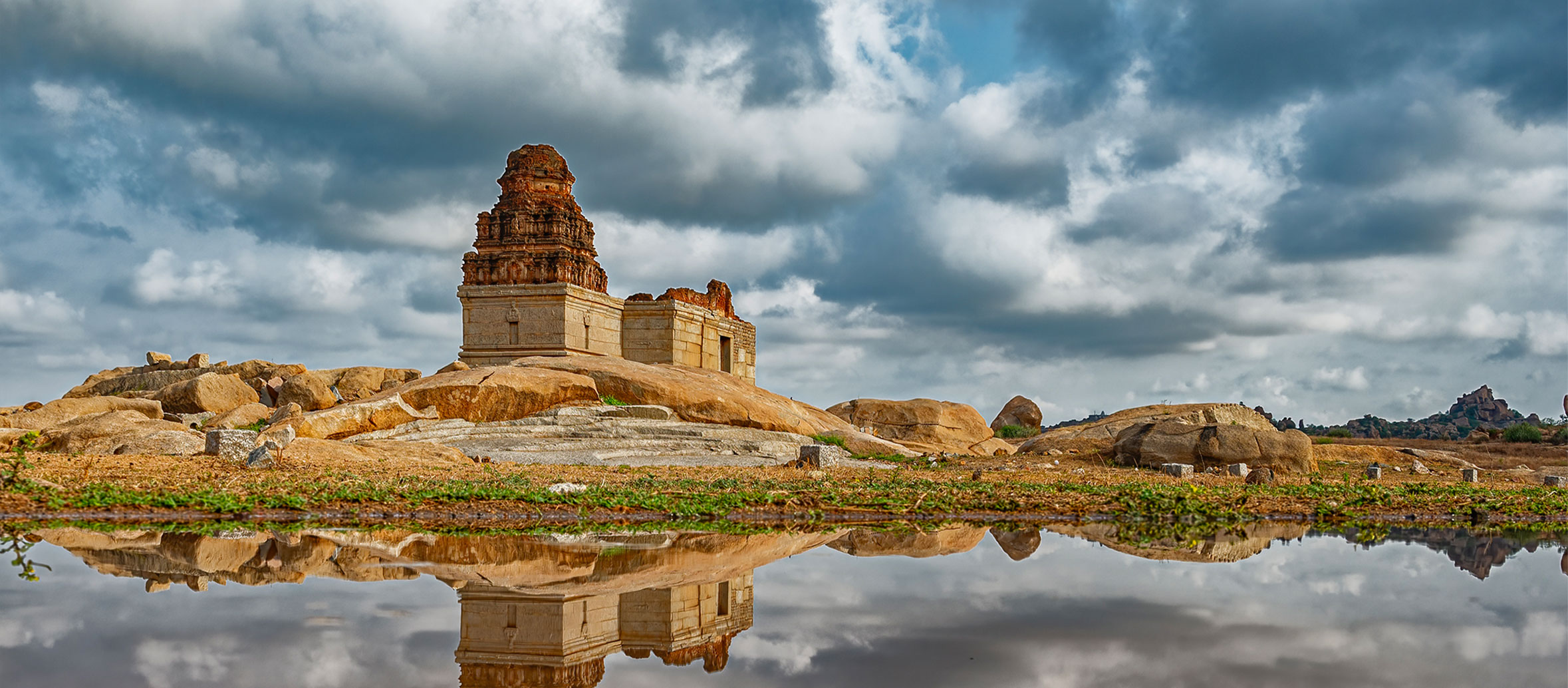
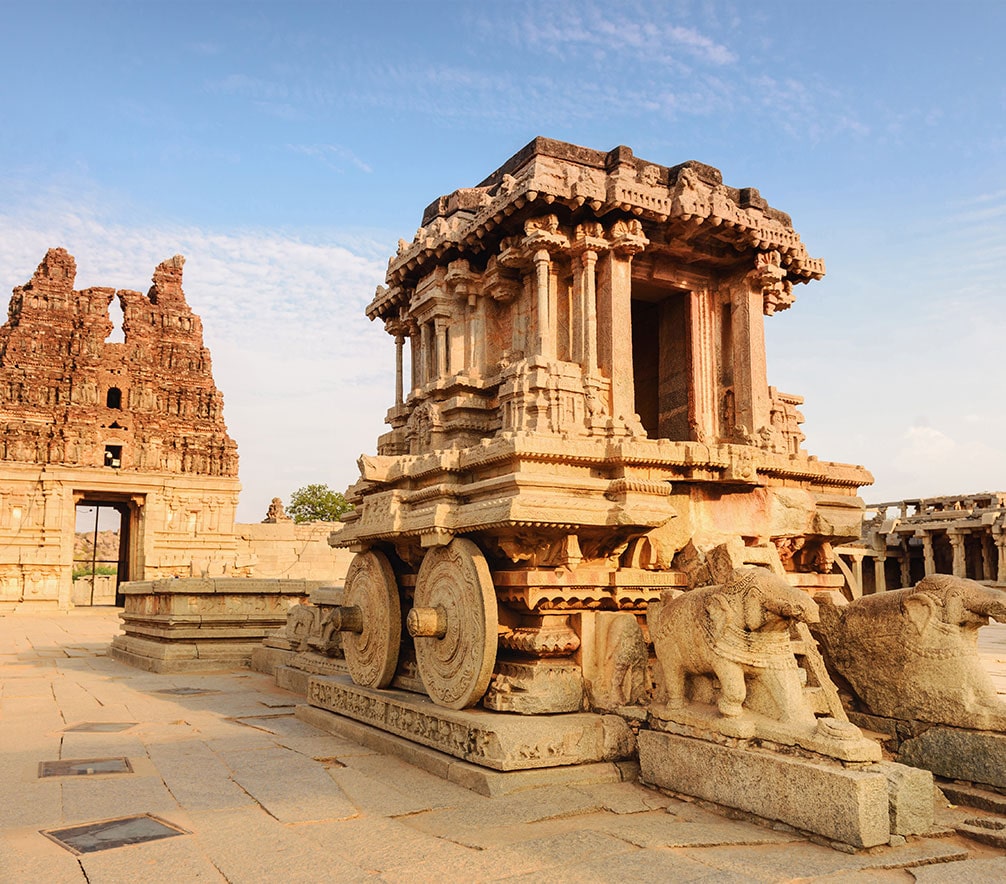
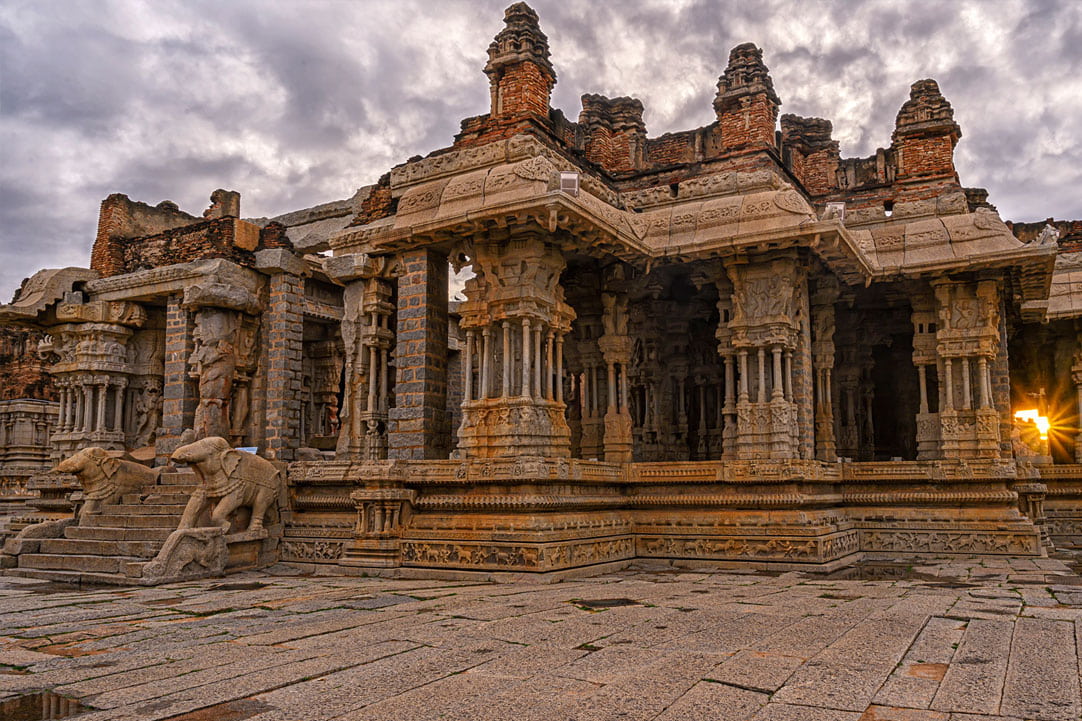
Hampi is a UNESCO World Heritage Site and was the capital of the once-mighty Vijayanagara Empire. Founded in the 14th century, Hampi lost its prominence after it was sacked and burnt to the ground in the 16th century. Today the ruins of Hampi, spread over 25 sq. km, is the largest complex of ruins in India and akin to an open-air museum of the rich cultural, religious, and political history of one of the mightiest empires of South India.
Hampi Sight Seeing
Join one of our organized tours of Hampi, where you can explore its stunning ruins.
We offer a variety of tour packages tailored to your specific needs, along with comfortable transportation that covers all the key attractions in Hampi. Additionally, our tours can be customized to suit your preferences.
Read more
Mathanga Hill
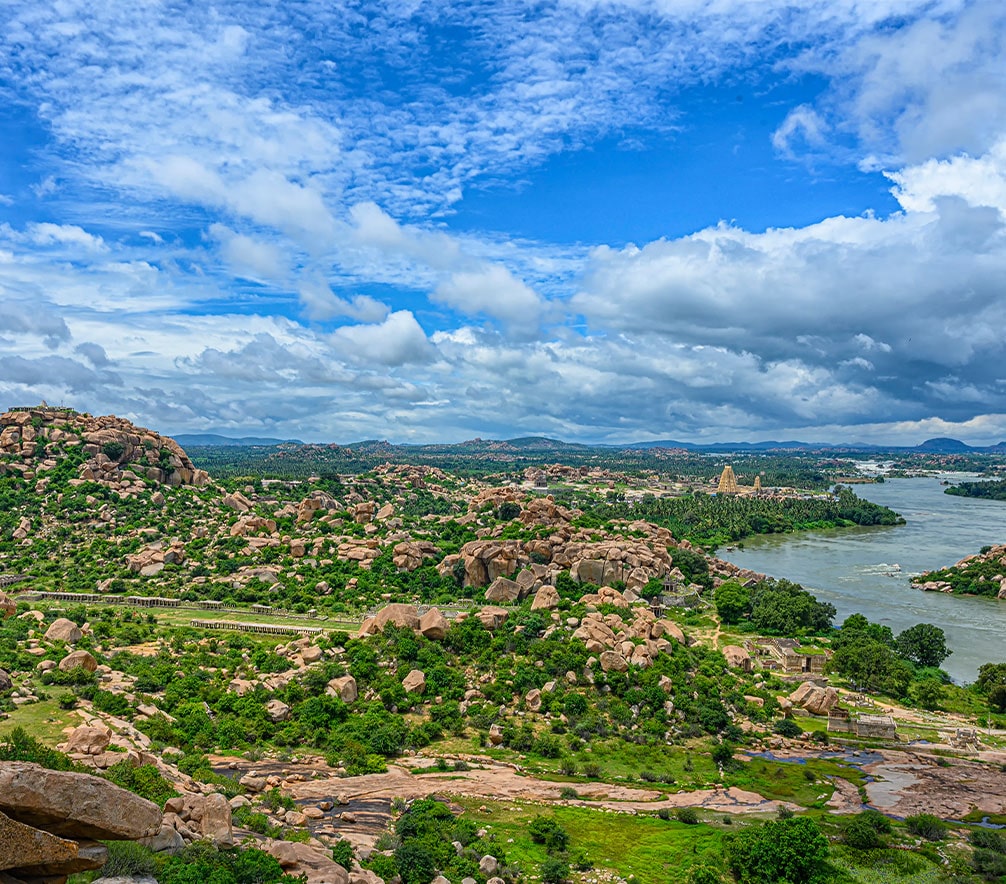
Sunset Point – Among the most well-known places in Hampi, Matanga Hill, with its central location, is the best spot to get a bird’s-eye view of Hampi. It is also a popular location to watch the sunrise and sunset.
Tungabhadra Dam
The Tungabhadra Dam, located near Hospete, is a popular picnic spot. During the monsoon, the dam fills with water, creating a large lake and making it a place of great natural beauty.
Daroji Bear Sanctuary
Daroji is the ideal place to spot the honey-loving Sloth bears, which are endemic to India. Visitors may also encounter jackals, wild boars, mongooses, black-napped hares, and leopards.
The sanctuary features a watchtower that offers stunning views of the rugged landscape in the Hampi region.
Adventure Trekking
Hampi is a fantastic destination for trekking enthusiasts; its rocky terrain and numerous hills provide excellent trekking and climbing opportunities. At our resort, we organize adventure trekking upon request.
Resort Tour Visit
We offer a day package for guests wishing to visit our resort with family or groups.
This package includes access to the swimming pool (swimsuits available for purchase), indoor games, lunch, and Hi-Tea.
Welcome with aarti and tika
Swimming Pool
Lunch
Guided property tour
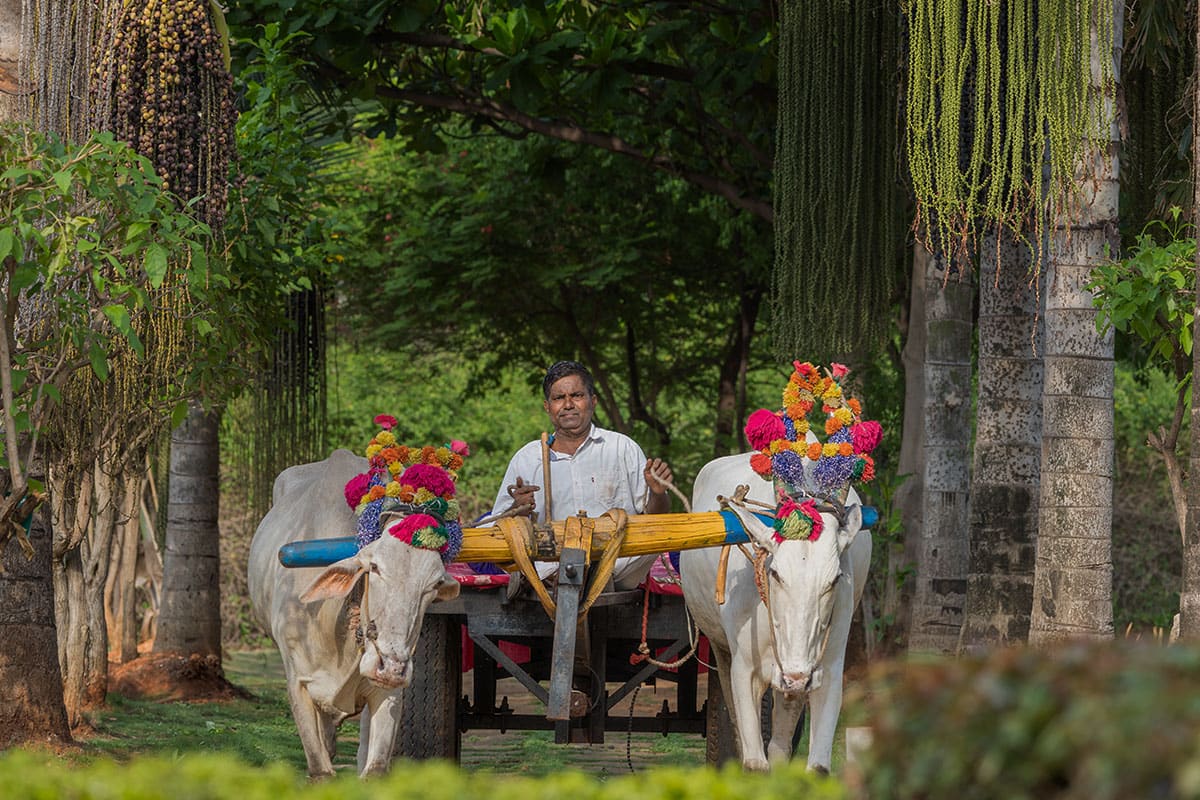
Horse/Bullock cart ride.
Henna painting for ladies
Outdoor games- Volley ball and cricket.
@ 1999+ tax
The Destination
Geography
Hampi is located on the banks of the Tungabhadra River in Karnataka. Situated in the Deccan
plateau, it has a unique landscape dominated by huge granite boulders of varying shades of
grey, ochre, and pink. While the terrain may look very unstable it is one of the most ancient and
stable surfaces to be found anywhere on the planet.
History
Established in 1336 by two brothers Harihara and Bukka, it quickly rose to prominence with the
spread of the Vijayanagara Empire. Said to rival Rome in its heyday, it reached its pinnacle
during the reign of Krishnadeva Raya. It fell to a confederacy of the Deccan Sultanates after the
Battle of Talikota in 1565 leading to its downfall and eventual abandonment.
People
Hampi is a multicultural community of people with historical connections to the area as well as
those who moved in search of opportunities. While the vast majority are Hindus, there is a
significant population of Muslims, Buddhists, Jains, Sikhs, and others. Prominent among the
recent arrivals are the Lambanis, a once-nomadic people who have since made Hampi their
home.
Culture
Hampi has both great historical and religious significance. It is identified with the Ramayana and
the story of Shiva and Parvati, called Pampa in the region. It was also the capital of the
Vijayanagara Empire and a place of great cultural and social diversity. While there was a steady
cultural exchange between Vijayanagara and the Deccan Sultanates, there were also a large
number of visitors from further afield – mainly merchants, travelers, and adventurers attracted
by opportunities for trade and gainful employment. These included Persians, Arabs, and
Europeans making Hampi a very cosmopolitan city.
UNESCO World Heritage Site
The Group of Monuments in Hampi, encompassing an area of 4187.24 hectares, and containing more than 1600 surviving remains that include forts, riverside features, royal and sacred complexes, temples, shrines, pillared halls, mandapas, memorial structures, gateways, defence check posts, stables, water structures, etc. is a UNESCO World Heritage Site. These structures are the remnants of the Capital City of the Vijayanagara Empire (14th-16th Cent CE), the last great Hindu Kingdom.